From 25–27 August 2026, the National Exhibition and Convention Center in Shanghai will host one of the most significant events on the global textile calendar: Intertextile Shanghai – Autumn Edition.
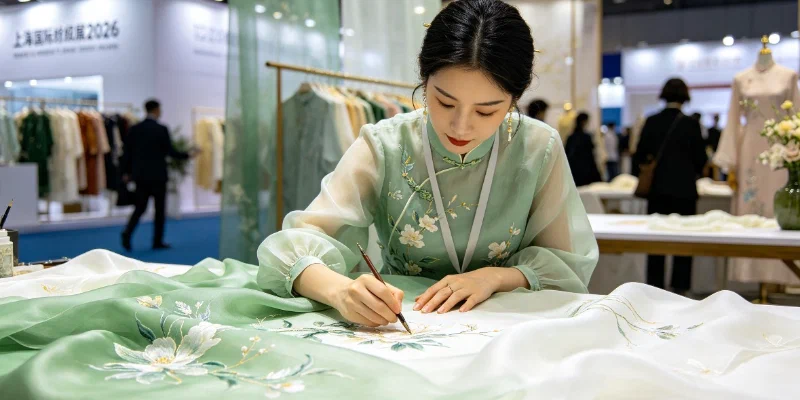
For anyone sourcing silk fabric – whether you're a designer, brand owner, or procurement specialist – this year's fair offers something unusual: a dedicated silk presence that spans the entire value chain, from Chinese heritage mills to Italian luxury weavers, and from traditional craftsmanship to washable innovation.
Here's what you need to know before you go.
The Silk Pavilion: China's Silk Industry in One Hall
For the first time in several years, the China Silk Association is organising a dedicated pavilion of silk enterprises at Intertextile.
This is significant. Instead of scattering silk suppliers across different halls, the pavilion groups together selected mills from key silk-producing regions – including Zhejiang, Jiangsu, and Sichuan – in one concentrated area.
The pavilion is positioned alongside other regional industry clusters from Shaoxing, Shengze, and Fujian, creating a comprehensive snapshot of China's textile manufacturing landscape. For buyers, this means efficient comparison shopping: you can assess multiple suppliers, compare qualities and MOQs, and establish initial contacts – all within a few hours.
What to See: Silk Innovations and Classics
Washable Silk – A Game Changer
One of the most talked-about launches at this year's fair is from Dali Silk (Hall 6.2, Booth E56). The company is showcasing its SILKOLOGY® collection, which features a machine-washable silk technology.
According to the company, the fabric can withstand up to 50 washes without losing its softness, sheen, or structural integrity. For brands that have avoided silk because of its delicate care requirements, this could be a significant development. It opens up new product categories – silk shirts that can go in the washing machine, silk dresses that don't need dry-cleaning, silk bedding that survives repeated laundering.
Italian Elegance
The Italian pavilion, organised in partnership with ICE (Italian Trade Agency) and Milano Unica, brings together some of Italy's finest textile houses. Silk is a major focus. Exhibitors include mills that supply top-tier luxury brands, offering everything from lightweight printed silks to structured silk blends for outerwear.
Italian silk is not cheap – but for brands positioned at the luxury end of the market, the combination of design expertise, finishing quality, and brand prestige makes it a compelling option.
Turkish and Indian Offerings
The Turkish pavilion features mills specialising in silk, jacquard, and lace – often with more competitive pricing than their Italian counterparts while maintaining strong quality.
The Indian pavilion is worth visiting for silk and cashmere suppliers, particularly those with vertical integration (from raw material to finished fabric). India's silk industry is diverse, including the famous Muga silk from Assam and traditional Banarasi weaves.
Trends to Watch
1. Sustainable Silk
The fair has dedicated sustainability zones – both in the domestic and international sections. In these areas, you'll find:
- Peace silk (Ahimsa silk) – produced without killing the silkworm
- Organic silk – certified under GOTS or OEKO-TEX
- Recycled silk blends – using post-industrial waste
- Low-impact dyeing – processes that reduce water and chemical use
For brands with sustainability commitments, these zones are an efficient way to find certified suppliers who take environmental and ethical issues seriously.
2. Digital and Smart Textiles
The Digital Fashion Innovation Zone and New Technology Zone showcase where silk is heading. Look for:
- Digital printing on silk – enabling small-batch customisation
- Smart silk fabrics – integrating sensors or conductive threads
- AI-assisted design – pattern generation and colour matching
3. Colour and Texture Trends
The fair will release the 2027/28 Autumn/Winter fabric trend forecast, with silk featuring prominently in the "gloss and texture" category. Expect to see:
- Lustrous satins and taffetas
- Matte crepes and georgettes
- Textured silks – slubbed, bouclé, and blended with other fibres
Pre-register online to skip queues. Plan your route – silk is mainly in Halls 6.2 (China Silk Association), 5.1, and 6.1 (international). Bring swatches and specifications to communicate clearly with mills.
Practical Tips for Visitors
Before You Go
- Pre-register online – registration is available on the Intertextile official website, which speeds up entry.
- Plan your hall route – the fair occupies nine halls. Download the floor plan and mark the silk-relevant areas: Halls 6.2 (domestic silk and premium fabrics), Halls 5.1 and 6.1 (international pavilions), and Hall 6.1 (Italian and European exhibitors).
- Bring samples and specs – if you're looking for a specific fabric type, carry physical swatches or detailed specifications (momme weight, weave, colour references). This helps mills understand exactly what you need.
During the Fair
- Start with the Silk Pavilion – this gives you a broad view of what's available before you dive into specialised areas.
- Visit the trend forums – the fair hosts daily seminars. Topics include sustainability, digital transformation, and market outlook for 2027. It's worth attending at least one session to gauge the direction of the industry.
- Collect business cards and fabric samples – but make notes immediately. Take photos of the fabric with the supplier's card in the frame, so you can recall which sample came from which mill.
- Ask about MOQ – minimum order quantities vary widely. Some mills in the silk pavilion accept orders from 100 metres per colour; others require 500–1,000 metres. This should be one of your first questions.
What This Means for Silk Buyers
Intertextile Shanghai is not just a trade show – it's a barometer of the silk industry. The presence of the China Silk Association pavilion, the innovations in washable silk, the mix of domestic and international suppliers, and the emphasis on sustainability all point to a sector that is evolving rapidly.
For buyers, this means:
- More options – both in terms of suppliers and product types
- Higher quality standards – as mills compete on performance as well as price
- Greater flexibility – with more mills willing to accommodate smaller orders
- Clearer sustainability pathways – with dedicated zones making certified suppliers easier to find
If You're Not Attending
If you're unable to make it to Shanghai, the trends and innovations emerging from the fair are still relevant.
- Follow the fair on social media – Intertextile posts updates throughout the event
- Contact suppliers directly – many exhibitors are listed on the fair's website with contact details
- Ask your sourcing partner – if you work with a local agent in China, ask them to visit on your behalf. They can screen suppliers, collect samples, and report back on what's new.
Final Thoughts
Intertextile Shanghai 2026 is a reminder that silk is not a static industry. It's moving: towards washability, towards sustainability, towards digital integration. The fair brings together the old and the new – traditional silk weaving alongside AI-assisted design, heritage mills alongside innovative start-ups.
For anyone who sources silk, this is where the future of the industry is on display.
Frequently Asked Questions
I find. I check. I seal. You relax.