You've designed a stunning collection. The samples are perfect. Now you need to source the silk — and the thought of buying from overseas is both exciting and terrifying. Will the quality match the sample? Will the factory deliver on time? Is the price fair? Will you end up paying for something you can't use?
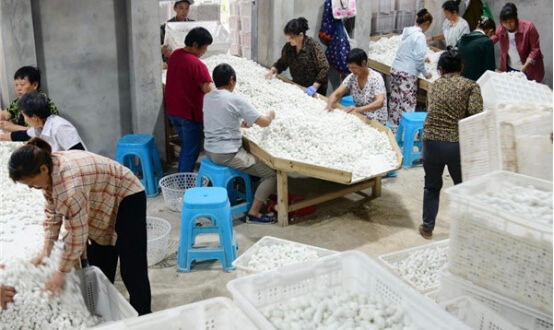
If you're a small fashion brand or independent designer, these questions are even more pressing. You don't have a team of sourcing experts in China. You don't have the budget to fly to Guangzhou or Hangzhou to inspect factories. And you definitely can't afford to lose an entire order to a bad batch.
I'm Liu from Silk.Sale. I live in Nanchong — the heart of China's silk industry — and I help small brands navigate these exact challenges every day. This guide shares everything I've learned so you can source premium silk safely, even from thousands of miles away.
Why Nanchong? The World's Silk Capital
Nanchong has been producing silk for over 3,000 years. Today it's the most concentrated center for 6A grade mulberry silk in the world. With over 30,000 acres of mulberry fields, 73+ active mills, and a complete supply chain from cocoon to finished fabric, Nanchong offers:
- Unmatched quality — The majority of Nanchong's output meets 6A grade standards, the highest commercial classification for raw silk.
- Full-chain integration — From silkworm rearing to reeling, weaving, dyeing, and finishing — everything happens within a 50km radius. Faster lead times, lower transport costs.
- Small-batch flexibility — Unlike giant mills in Zhejiang that demand 1,000m+ per order, Nanchong's cooperative mills are experienced with smaller, customized runs.
But even with this incredible infrastructure, sourcing safely requires knowing how to navigate the system.
The 4 Biggest Risks When Sourcing from China — And How to Avoid Them
Quality Mismatch
The sample you receive is beautiful. The bulk order? Not so much. Different grade, different weight, different color.
Hidden Markups
Trading companies add 20–40% margins. You pay more than the mill price, often without knowing it.
Communication Gaps
Language barriers and time zones lead to misunderstandings. What you think you ordered isn't what gets produced.
Delivery Delays
A promised 30-day lead time becomes 60 days. Your production schedule is ruined.
Each of these risks is real — and each can be mitigated with the right approach.
A Safe Sourcing Framework: 5 Steps to Success
Here's the step-by-step process I follow when helping clients source from Nanchong.
Define Your Specs Exactly
Momme weight (19mm, 25mm, 30mm), weave (satin, chiffon, crepe), color (Pantone code if possible), and quantity. The clearer you are, the less room for error.
Request & Verify Samples
Always request pre-production samples. When they arrive, test them — burn test, drape test, wash test. Approve only when you're fully satisfied.
Get a Transparent Quote
Ask for a breakdown: raw silk cost, weaving, dyeing, finishing, and any extras. If a quote seems too good to be true, it probably is.
Arrange Pre-Shipment Inspection
Before any payment is finalized, have someone physically inspect the goods. Verify weight, color consistency, fabric width, and defects — request video evidence.
Coordinate Logistics & Delivery
Work with a freight forwarder experienced in textile shipping. Confirm the timeline, shipping method, and who handles customs clearance. Always track your shipment.
Why Pre-Shipment Inspection Is Non-Negotiable
In my years sourcing in Nanchong, I've seen countless small brands lose money because they skipped inspection. A roll might look fine in a photo, but when it arrives the color is off, the weight is wrong, or there are hidden defects. By then it's too late — the supplier has been paid and your production schedule is in chaos.
Pre-shipment inspection is your safety net. It ensures:
- Quality matches your sample — Weight, hand feel, and color are verified before shipping.
- Defects are caught early — Stains, broken ends, and slubs are rejected before they become your problem.
- You have leverage — If the goods don't meet the standard, you can negotiate a discount or replacement before payment is released.
At Silk.Sale, this is exactly what I do for every client. I visit the mill, inspect every roll, apply a tamper-proof anti-fake label, and send you a video report. You don't pay until you've seen exactly what you're getting.
Your Sourcing Options: A Clear Comparison
| Option | Best For | Risk | Cost | Quality Control |
|---|---|---|---|---|
| Direct from unknown supplier | Large brands with on-site teams | High | Unpredictable | None |
| Trading company | Small orders, but high markup | Medium | High (20–40% markup) | Limited |
| Independent sourcing partner | Small brands with no local team | Low | Transparent (mill price + commission) | Full inspection, video report |
For most small brands, an independent sourcing partner offers the best balance of safety, cost, and convenience. You get mill-direct pricing, expert guidance, and full inspection — without the overhead of hiring your own team in China.
"Before I found Silk.Sale, I was buying from a trading company in Guangzhou. I paid $18/m for 25mm charmeuse. Now I pay around $13/m, and Liu actually inspects every roll. I sleep better at night." — European lingerie brand
How Silk.Sale Makes It Safe
Here's what I do differently from a typical supplier or trading company:
- Find the right mill — I search my network of Nanchong mills to match you with the best quality for your specific needs and MOQ.
- Inspect personally — I visit the factory and check every roll. Weight, weave, color, defects — no shortcuts.
- Seal with an anti-fake label — Every inspected roll gets a unique tamper-proof label. You know the exact batch you approved.
- Send a video report — You see what I see. A short video showing the actual goods being inspected before anything ships.
- Coordinate shipping — I help arrange logistics, from warehouse to your door.
You pay a transparent 3–9% commission only when you place an order. No hidden fees. No surprises.
I find. I check. I seal. You relax.