You've approved a perfect colour swatch. The bulk order arrives — and the fabric looks noticeably different. Lighter, darker, or with a slightly shifted hue. It's one of the most frustrating and costly surprises in silk sourcing.
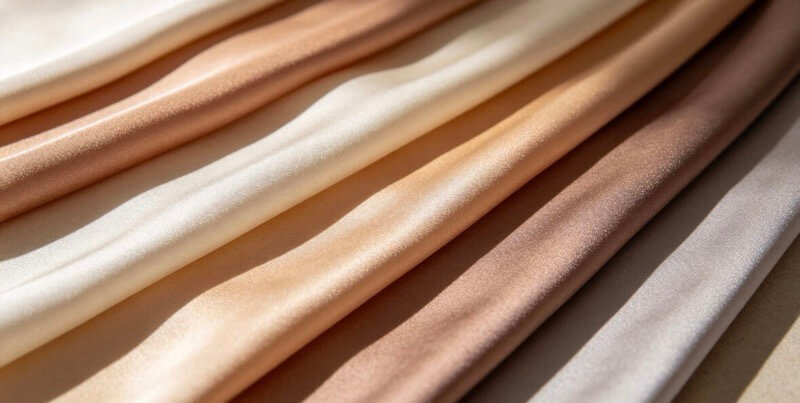
Colour variation between batches is common in textile manufacturing, and silk is no exception. But the good news is that it's manageable. Understanding the root causes gives you the power to set up systems that minimise risk and keep your production consistent.
1. Why Does the Same Silk Colour Differ Between Batches?
Even with the same recipe, multiple variables affect the final colour of a dyed silk fabric. Here are the most significant ones:
| Factor | How it causes variation |
|---|---|
| Dye lot differences | Dyes are produced in batches; each batch can have slight variations in concentration and purity. Even a 1–2% difference can shift the final shade. |
| Base fabric whiteness | Silk's natural colour can vary slightly depending on the cocoon origin and degumming process. A yellowier base will absorb dye differently than a brighter white base. |
| Dye bath conditions | Temperature, pH, and dyeing time all affect absorption. A bath that runs 2°C hotter can produce a deeper shade. |
| Finishing processes | After dyeing, fabrics undergo heat setting, washing, and softening. Variations in temperature or tension during these steps can change the final colour perception. |
| Lighting & viewing conditions | Metamerism – colours appear different under different light sources (daylight vs. fluorescent vs. LED). Without controlled lighting, you and your supplier may see different things. |
Perfect colour match across batches is nearly impossible. The goal is controlled tolerance, not zero variation. The industry standard is a Delta E (ΔE) of ≤ 1.0–2.0, which is barely perceptible to the average eye.
2. How to Set Up a Smart Colour Management System
You can dramatically reduce colour-risk by implementing a few key practices from the very beginning of your sourcing process.
2.1. Use a Physical Colour Standard (Not Just a Pantone Number)
A Pantone number is a great communication tool, but it's not reliable for final colour matching. Always request a physical swatch from the supplier's actual production run. That swatch becomes your official "reference standard" for the entire order. Keep it in a dark, cool place to prevent fading.
2.2. Agree on an Acceptable Tolerance in Writing
Before production, state clearly in your contract: "Colour must match the approved physical swatch within ΔE ≤ 1.5 under D65 (daylight) lighting." This gives you a measurable, enforceable standard.
2.3. Ask for "Cutting Blanket" Samples
A cutting blanket is a sample taken from the actual batch of fabric that will be shipped – not a pre-production lab dip. Request this before the bulk is shipped. If the blanket doesn't match your standard, you can reject or ask for a re-dye before it's too late.
Always pay for a cutting blanket – it's a small cost (often < $50) that protects you from a costly rejection. Free samples are often made with extra care; paid samples from the actual batch are more honest.
2.4. Use a Standardised Light Booth
Your in-house quality team should view fabric under a calibrated light booth with D65 (daylight) and TL84 (fluorescent) lamps. This minimises the "metamerism" problem and gives you an objective view.
2.5. Order All Fabric for One Run from the Same Dye Lot
If you need 500 metres, order it all at once. If you need a top-up later, it will almost certainly come from a different dye lot and will not match perfectly. Plan ahead – buy extra 10–15% for trims and cutting allowance.
3. What to Do When Variation Occurs
Even with the best preparation, variations can happen. Here's a practical response plan:
- Measure objectively – use a colour spectrophotometer to measure ΔE. If it's within the agreed tolerance, accept it.
- If it's outside tolerance – don't cut the fabric. Negotiate a discount, return for re-dye (if feasible), or use the fabric for a different collection where colour is less critical.
- Separate lots – if you have two different batches, cut all pieces for a single garment from the same lot to avoid a "panelled" effect.
- Learn and adjust – share the feedback with your supplier and update your quality agreement for next time.
At Silk.Sale, we take colour consistency seriously. Every roll we inspect is checked under standardised lighting against your approved physical sample. We provide a video report and a sealing label so you know exactly what you're receiving. Colour variation doesn't have to be a nightmare – with the right systems, it's just another manageable part of quality control.
Frequently Asked Questions
I find. I check. I seal. You relax.