Have you ever touched raw silk – not fabric, but the thread straight from the reeling mill, before any treatment?
It feels like fine hemp rope. Stiff. Harsh. Completely without luster. You would never connect it with the words "soft" or "smooth."
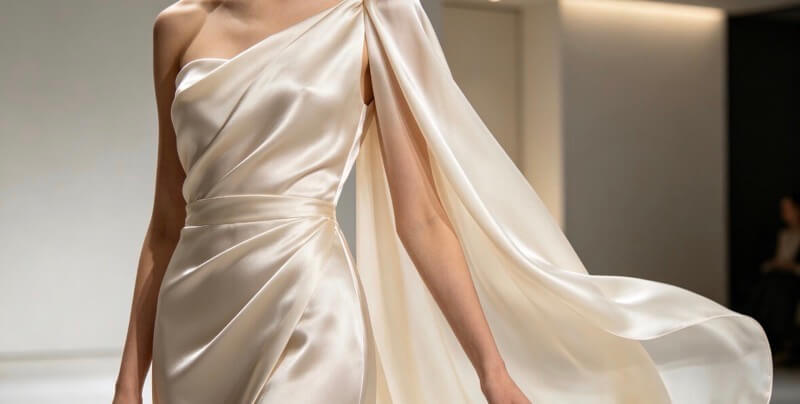
But that expensive silk shirt you love, that dress with the perfect drape – they all start from this rough state, and they become luxurious only after a series of finishing processes.
Let me walk you through exactly what happens to silk before it leaves the mill.
Step 1: Degumming – Removing the Stiffness
Raw silk is stiff because of sericin, a natural protein that the silkworm secretes to bind the two filaments together into a single strand. Sericin acts like glue – it makes the fibres stick together, but it also makes the fabric rigid, rough, and less absorbent.
So the first step is to remove it. This process is called degumming.
Traditionally, degumming was done by boiling the silk in a solution of soap and soda ash. Modern mills use milder enzyme-based processes or surfactants that achieve the same result with less chemical impact.
The degree of degumming is one of the most critical quality determinants:
- Under-degummed: fabric remains stiff and harsh.
- Correctly degummed: fabric becomes soft, with natural luster.
- Over-degummed: the fibre surface is damaged, strength is reduced, and the fabric becomes weak.
Step 2: Dyeing – Adding Colour
After degumming, the fabric is white and soft – but colourless. Next is dyeing.
Dyeing silk is not a simple "dip and soak" process. Silk is a protein fibre, and it is sensitive to pH, temperature, and time. The type of dye, the temperature of the bath, the duration, and the liquor ratio all affect the final colour. The same dye formula can yield noticeably different shades with small parameter changes.
This is why colour variation between batches is so common – dye vats are never exactly identical, and operators are not machines.
Darker colours cost more. Black, navy, deep red – they require more dye, longer processing times, and stricter fastness requirements. That's why they command a premium.
Colour variation is the #1 complaint in silk sourcing. The best mills control dyeing parameters tightly and use lab dips to match standards. Always ask for a colour standard (e.g., Pantone) and request pre-production lab dips before bulk dyeing.
Step 3: Softening – From "Okay" to "Premium"
After dyeing, the fabric is soft – but not yet "luxurious." The next step is softening.
Mills apply softeners – usually silicone-based or fatty-acid compounds – to the fabric surface. These reduce the coefficient of friction between fibres, making the fabric feel smoother to the touch.
The type and amount of softener directly determine the final hand-feel:
- Too little: the fabric still feels slightly harsh.
- Just right: the fabric feels "premium" – smooth but with body.
- Excessive: the fabric becomes artificially slippery, loses its natural character, and the scroop (the characteristic rustling sound) disappears.
Many low-end fabrics rely on heavy softener application to fake a premium feel. They feel smooth when you first touch them, but after one wash, the softener washes out and the fabric's true quality becomes visible.
Step 4: Sand-Washing – Creating a "Lived-in" Matte Finish
Sand-washing is a specialty finishing technique where fine abrasives (or special rubbing rollers) are used to gently distress the fabric surface. This creates a soft, matte, slightly "vintage" appearance.
Sand-washed silk loses some of its high-gloss luster but gains a softer, more substantial hand-feel. Many premium brands use sand-washed silk for shirts and dresses because it looks understated and feels luxurious without being shiny.
However, sand-washing does reduce fabric strength and can slightly lighten the colour. Buyers should be aware of these trade-offs and adjust their specifications accordingly.
Step 5: Stentering – Locking the Dimensions
After all the wet processing, the fabric dimensions will have shifted – usually, it shrinks. The final finishing step is stentering (or tentering): the fabric is stretched to the required width and heat-set to stabilise its dimensions.
This step directly determines the final width and the shrinkage rate of the fabric.
- Well-stentered fabric: shrinkage stays under 3%.
- Poorly stentered fabric: shrinkage can reach 8-10%, which will ruin garment patterns.
Why Understanding Finishing Matters for Buyers
Every finishing step affects the final quality and cost of your fabric.
The same raw silk from the same batch, finished in different ways, will produce completely different fabrics. Proper degumming, balanced softening, accurate stentering – these cost more and deliver better quality. Cutting corners on any of these steps lowers the price – but also lowers the performance and longevity of the fabric.
So when you source silk, don't just ask "Is this 6A grade?" Ask:
- "What degumming process do you use?"
- "How much softener do you apply – and what type?"
- "What are your stenter settings – temperature, speed, overfeed?"
A mill that can answer these questions clearly is far more reliable than one that just says "trust our quality."
Frequently Asked Questions
I find. I check. I seal. You relax.