"Silk satin", "satin silk", "silk-like satin" — the terminology around these two words is genuinely confusing, and it costs brands real money every year. Silk is a fibre. Satin is a weave. They are fundamentally different things, and understanding the distinction is one of the most important pieces of knowledge any fashion buyer needs before placing a fabric order.
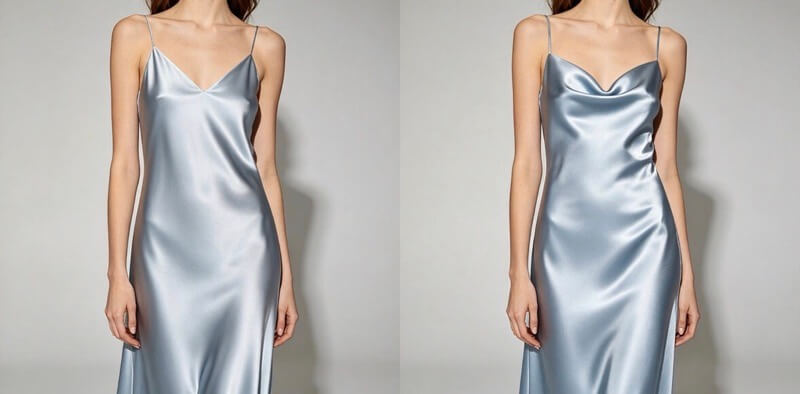
In this guide, I'll explain the difference clearly, show you why it matters for sourcing, and help you avoid the most common and costly mistakes when ordering fabric for your collection.
The One-Sentence Answer
Silk is a natural fibre produced by the Bombyx mori silkworm. Satin is a weave structure — a specific pattern of interlacing yarns that creates a smooth, glossy surface on the front and a matte back. Satin can be made from silk, polyester, nylon, acetate, or any other fibre. The confusion arises because silk is often woven in a satin pattern — and that fabric is called "silk satin" or "charmeuse".
What Is Silk?
Silk is one of the oldest and finest natural fibres in the world. It is produced when silkworms spin cocoons from a continuous protein filament — sericin and fibroin — that can be reeled into a thread of extraordinary fineness and strength.
Key characteristics of silk as a fibre:
- Natural protein fibre — biodegradable and skin-friendly.
- Temperature-regulating — warm in winter, cool in summer.
- Naturally lustrous — silk's triangular cross-section refracts light, creating a soft, multi-directional shimmer that no synthetic can fully replicate.
- Strong but delicate — high tensile strength, but sensitive to UV light, sweat, and harsh detergents.
- Hypoallergenic — naturally resistant to dust mites and mould.
The grade of silk matters enormously. At Silk.Sale, we work exclusively with 6A grade mulberry silk — the highest commercial classification, produced from the finest Bombyx mori cocoons in Nanchong, Sichuan.
What Is Satin?
Satin is defined by its weave structure, not its fibre. In a satin weave, the warp yarns "float" over multiple weft yarns before interlacing, creating a smooth, tightly packed surface with minimal texture. The result is the glossy, fluid drape we associate with luxury fabric.
Key characteristics of the satin weave:
- Smooth, glossy front — the floating warp yarns catch light uniformly.
- Matte back — the interlacing happens on the reverse.
- Fluid drape — the weave structure allows the fabric to fall and move gracefully.
- Delicate surface — prone to snags if the floats are too long.
The satin weave can be applied to any fibre. Polyester satin is the most common form found in fast fashion. It mimics the sheen of silk but lacks its breathability, hand feel, and natural properties.
Silk Satin: When Both Combine
"Silk satin" — or charmeuse — is what happens when the satin weave is applied to silk fibre. The result is arguably the most luxurious fabric in the world: it combines the natural luster, breathability, and temperature regulation of silk with the smooth, fluid drape of the satin weave.
This is the fabric used for high-end evening gowns, luxury lingerie, bridal wear, and premium bedding. It is also the most commonly counterfeited or misrepresented fabric in B2B sourcing.
Side-by-Side: Silk Satin vs Polyester Satin
| Property | Silk Satin (6A mulberry) | Polyester Satin |
|---|---|---|
| Fibre | Natural protein (silk) | Synthetic (petroleum-based) |
| Luster | Deep, soft, shifts with angle | Harsh, uniform, plastic-like |
| Hand feel | Smooth, weightless, warms to skin | Slippery, often clammy |
| Breathability | Excellent, temperature-regulating | Poor, traps heat and moisture |
| Durability | High tensile strength, less abrasion resistance | High abrasion resistance, tends to pill |
| Biodegradability | Yes | No (microplastic shedding) |
| Price (approx. 25mm) | $35–37/m FOB Nanchong | $3–6/m |
Common Misconceptions — And Why They Cost You Money
Misconception 1: "Satin means silk"
False. Satin is the weave, not the fibre. A "satin pillowcase" may be polyester, not silk. If you're paying for luxury, always confirm the fibre composition, not just the weave name.
Misconception 2: "All silk is shiny like satin"
False. Silk can be matte. Crepe de chine, chiffon, and habotai are all silk fabrics with low to moderate luster. The shine comes from the weave structure, not the fibre. A silk crepe is matte — but it's 100% pure silk.
Misconception 3: "Silk satin is the highest quality fabric"
False. It's one of many premium options. The best fabric depends on your design — a flowing evening gown calls for silk satin; a structured shirt may need silk crepe de chine; an ethereal overlay works best in silk chiffon.
How This Affects Your Sourcing
When you communicate with a supplier, precision is critical. Here's what to specify every time:
- Fibre content: "100% mulberry silk" — never assume "satin" means silk.
- Weave type: "satin weave / charmeuse" vs "crepe" vs "plain weave".
- Momme weight: 19mm, 25mm, 30mm — this determines thickness, drape, and price.
- Width: 114cm or 140cm — affects yield calculations significantly.
Use exact language when requesting a quote: "25mm 100% mulberry silk charmeuse satin, 140cm width." This eliminates ambiguity. At Silk.Sale, we match every inquiry to the correct fibre and weave — and we inspect every roll to verify.
Why This Matters for Your Brand
The silk vs satin confusion leads to serious, recurring business problems:
- Cost overruns — paying silk prices for polyester satin.
- Quality failures — garments that don't breathe, drape, or feel as expected.
- Brand damage — customers who expected luxury receive a synthetic imitation.
- Production delays — ordering the wrong fabric means reordering, waiting weeks, and missing launch dates.
"A designer came to us after ordering 'silk satin' from a trading company. They paid $30/m and received polyester. That's the cost of ambiguity — and of not verifying before shipment. We sourced true 6A silk charmeuse at $35/m with full video inspection and a tamper-proof label." — Liu Qingsong, Silk.Sale
How Silk.Sale Ensures You Get What You Pay For
At Silk.Sale, we don't rely on labels or supplier claims. We verify every roll through:
- Mill vetting — we work exclusively with certified 6A mulberry silk mills in Nanchong.
- Pre-shipment inspection — every roll is checked for fibre composition, weight, weave accuracy, and defects.
- Video reporting — you see exactly what we inspect, including burn tests for fibre verification.
- Traceability — each roll receives a tamper-proof anti-fake label with batch and origin details.
Frequently Asked Questions
I find. I check. I seal. You relax.