You've decided to use silk for your collection. But which silk? Walking through a mill's sample room — or scrolling a supplier's catalog — you're confronted with names like charmeuse, chiffon, crepe de chine, habotai, organza. They all say "100% silk," yet they look, feel, and behave completely differently.
Choosing the wrong type can ruin a pattern, inflate your cost, or disappoint a customer. Choosing the right one elevates the design and makes production smooth. I'm Liu from Silk.Sale, based in Nanchong — China's Silk Capital. Every week I walk mill floors and handle these fabrics. Here's the guide I wish I'd had at the start.
At a Glance: Silk Fabric Types Compared
Before we dive into each type, here's a quick reference so you can find your fabric at a glance.
| Fabric | Weight (mm) | Drape | Luster | Opacity | Best For |
|---|---|---|---|---|---|
| Charmeuse | 12–30mm | Fluid, flowing | High, glossy | Semi-sheer to opaque | Dresses, blouses, lingerie, bedding |
| Chiffon | 6–10mm | Very fluid, crisp | Low, matte | Sheer | Overlays, scarves, blouses |
| Crepe de Chine | 12–16mm | Moderate, structured | Low, matte | Mostly opaque | Shirts, dresses, trousers |
| Habotai | 8–16mm | Soft, fluid | Moderate | Semi-sheer to opaque | Lining, flowing dresses, kimonos |
| Organza | 4–6mm | Stiff, crisp | High, transparent | Transparent | Eveningwear, overlays, bridal |
1. Charmeuse — The Classic Satin Weave
Charmeuse is probably what you picture when you think of "silk." It has a smooth, glossy front and a matte back — achieved through a satin weave structure where warp yarns float over multiple weft yarns, creating that characteristic shine.
- Drape: Fluid, almost liquid. It flows beautifully over the body.
- Luster: High and glossy — reflects light elegantly.
- Weight: 12–30mm. Lightweight charmeuse (12–16mm) suits blouses; heavier weights (25–30mm) suit dresses and outerwear.
- Common uses: Evening gowns, bridesmaid dresses, silk blouses, luxury bedding, pillowcases, and lingerie.
Charmeuse is one of the most popular weaves in our local mills. It requires high-quality 6A raw silk to achieve a clean, defect-free surface. Always specify momme weight when ordering — 19mm charmeuse is a reliable starting point for most garments.
2. Chiffon — The Ethereal Sheer
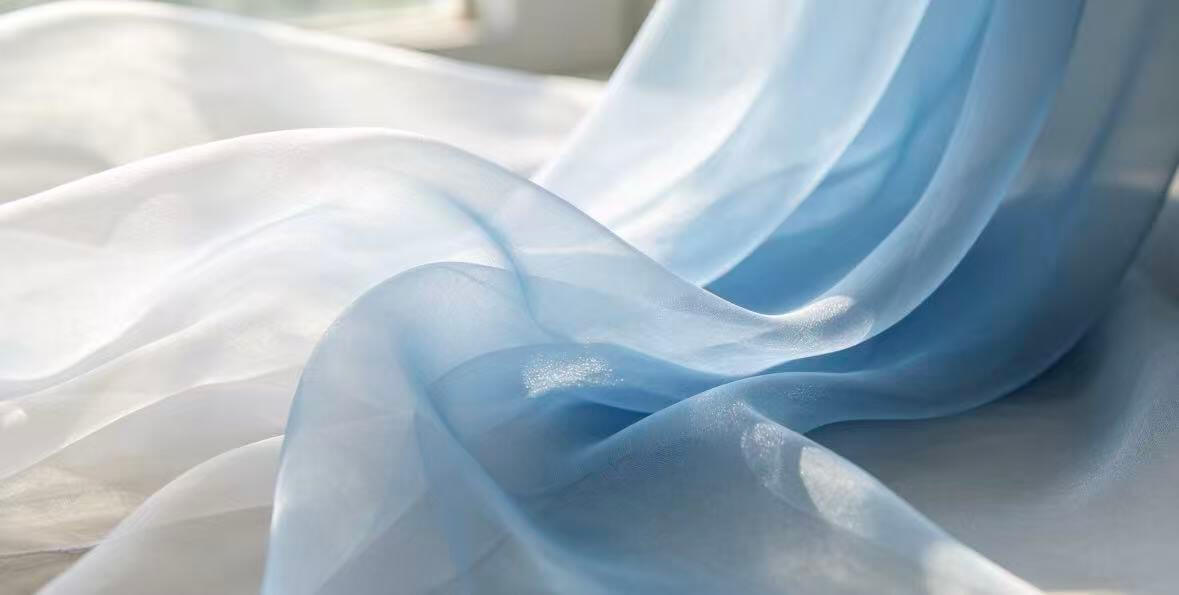
Chiffon is the lightest and most transparent of the common silk fabrics. Woven with highly twisted yarns, it has a slightly crinkled texture, a crisp hand, and a distinctive "floaty" quality with subtle stretch.
- Drape: Very fluid with a crispness that holds shape. It doesn't cling to the body.
- Luster: Low, matte — no shine.
- Weight: 6–10mm. Very lightweight.
- Opacity: Sheer — always needs lining or layering.
- Common uses: Bridal veils, overlay skirts, sheer sleeves, scarves, and evening shawls.
Chiffon frays easily — allow 5–10% extra fabric for cutting. Because it's so lightweight, quality variations are more visible. Ask for a pre-shipment video inspection to check for slubs or unevenness. I can do this for you.
3. Crepe de Chine — The Textured Workhorse
Crepe de Chine (CDC) is a medium-weight fabric with a subtle, pebbled texture. Woven with high-twist yarns, it creates a characteristic crêpe surface that doesn't wrinkle easily — making it a true workhorse for ready-to-wear collections.
- Drape: Moderate and structured. More body than charmeuse, but still fluid.
- Luster: Low, matte — elegant and understated.
- Weight: 12–16mm. A comfortable medium weight.
- Opacity: Mostly opaque — usually doesn't require lining.
- Common uses: Blouses, shirts, dresses, wide-leg trousers, and jumpsuits.
Crepe de Chine can slip during sewing. If you're ordering for production, request a small pre-production sample to test with your machines before committing to the full run.
4. Habotai — The Soft Lining & Flowing Fabric
Habotai (also called China silk) is smooth, soft, and versatile. Often used as lining for jackets and coats, it also works beautifully as a standalone fabric for flowing garments and hand-painted scarves.
- Drape: Soft and fluid — moves easily with the body.
- Luster: Moderate, subtle sheen.
- Weight: 8–16mm. Lighter weights for lining; heavier for garments.
- Opacity: Semi-sheer to opaque depending on weight. 12mm+ is usually wearable without lining.
- Common uses: Lining for wool jackets, slip dresses, kimonos, caftans, and painted scarves.
Habotai takes dye beautifully, making it ideal for colorful collections. If you need opacity for a dress, consider 16mm or a double layer. We can provide color-matched samples before you commit.
5. Organza — The Stiff Bridal Favorite
Organza is crisp, transparent, and stiff — made with tightly twisted yarns and often treated with a stiffening agent. Unlike chiffon, which flows, organza holds its shape, making it ideal for structured designs.
- Drape: Stiff and crisp — holds shape well.
- Luster: High, transparent — catches light beautifully.
- Weight: Very lightweight, typically 4–6mm.
- Opacity: Transparent — always needs lining.
- Common uses: Bridal gowns (overlays, sleeves), evening wear, structured skirts, and accessories.
Organza is more expensive than chiffon due to its tighter twist and specialized finishing. Some mills offer "stiff organza" and "soft organza" — specify which you need before sampling.
Fabric Selection by Use Case
If you're still unsure which to order, use this decision guide based on your garment type.
| Garment Type | Recommended Fabric | Why |
|---|---|---|
| Flowing evening gown | Charmeuse (19–25mm) | Drapes beautifully, glossy finish |
| Sheer blouse sleeve | Chiffon | Light, airy, ethereal |
| Tailored button-up shirt | Crepe de Chine | Holds shape, matte finish, easier to sew |
| Lining for a wool coat | Habotai (12mm) | Breathable, smooth against skin |
| Structured bridal overlay | Organza | Holds shape, transparent, dramatic |
| Luxury pillowcase | Charmeuse (25mm) | Soft, smooth, durable |
"Before I understood fabric types, I ordered chiffon for a structured dress. It was a disaster. Now I send Liu my design sketches, and he recommends the exact weave I need — then sources it with inspection. That's the kind of partnership every small brand needs." — Singapore-based womenswear designer
How to Order the Right Silk for Your Collection
Here's the step-by-step process I recommend for small brands ordering for the first time:
- Start with your design. Consider the silhouette, drape, and opacity you need. Sketch it out.
- Match the fabric type. Use this guide to identify which silk type works best.
- Request a swatch sample. Feel the weight and drape before ordering. I can send samples from Nanchong mills.
- Finalize your specs. Confirm momme weight, color, and quantity. Custom colors are available from 300 meters.
- Order with inspection. I'll source from the best mill, inspect every roll, attach a tamper-proof label, and send a video report before shipment.
I find. I check. You relax.